The IPL auction is not just a marketplace it is a moment where silence becomes the loudest sound in the room. For a few players, a raised paddle means instant transformation. For many others, it is another year of waiting, proving, and believing.
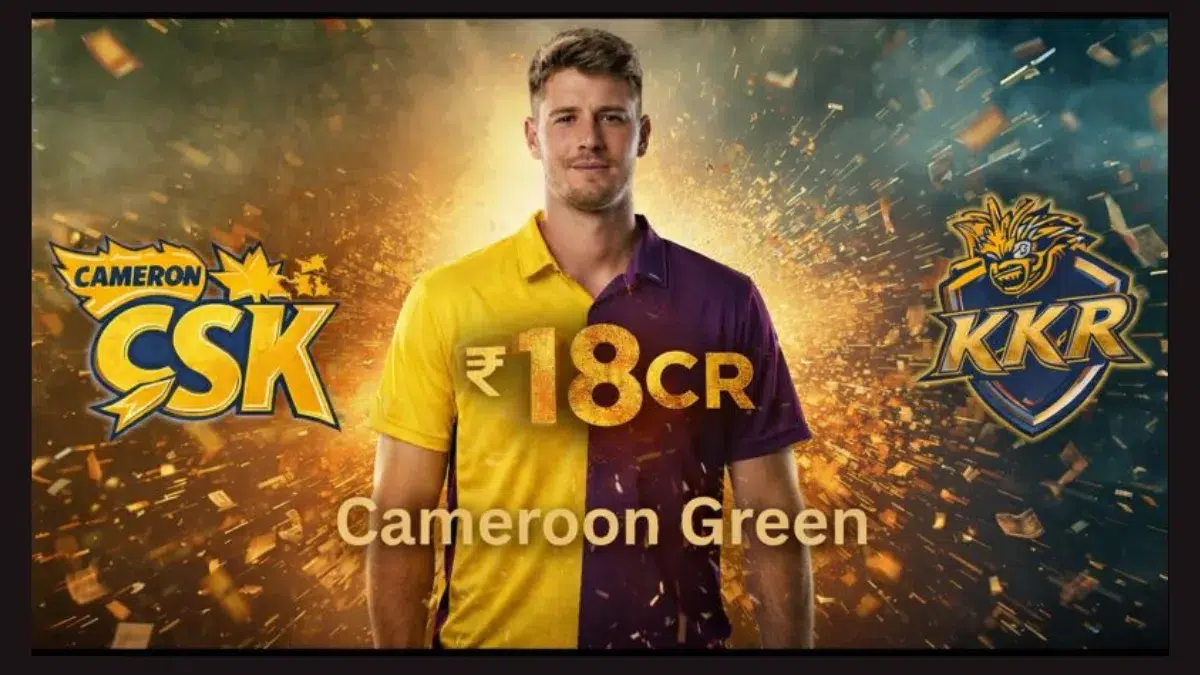
As the IPL Auction 2026 approaches, one name dominates every conversation: Cameron Green. The widespread assumption is that Green will become the most expensive player in IPL history. But the reality, shaped by a crucial auction rule, tells a very different story. Like how India missed T20WC broadcast drama.
The Overseas Player Price Cap Explained (IPL 2026)
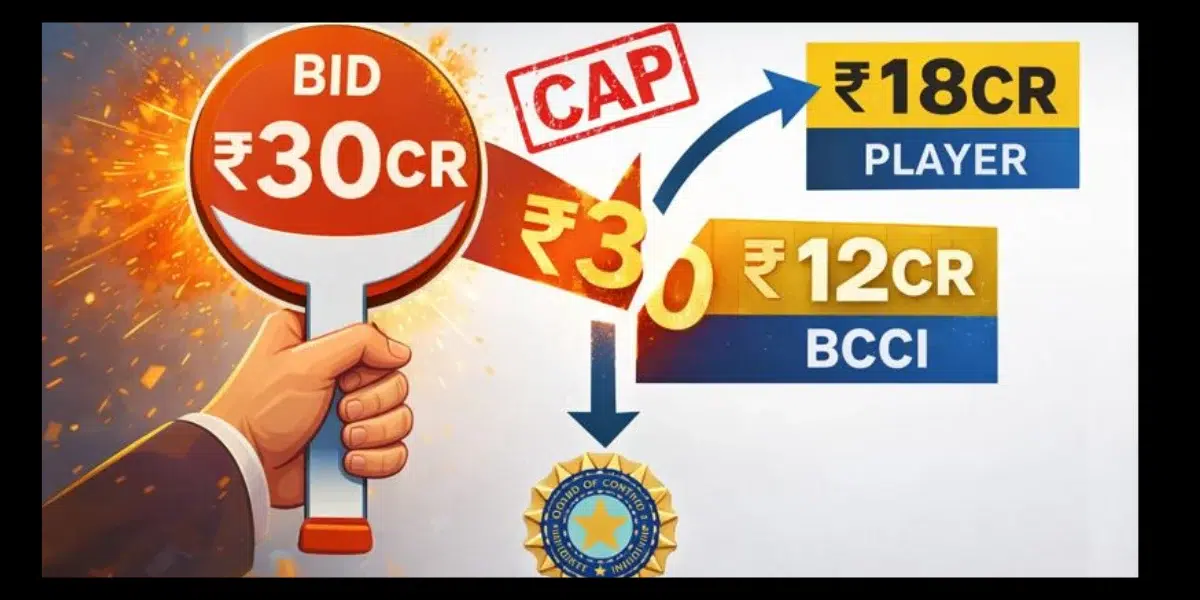
No overseas player in the IPL Auction 2026 can earn more than ₹18 crore, regardless of how high the bidding goes.
This rule was introduced after franchises observed a clear trend. Overseas players increasingly skipped mega auctions and registered for mini auctions instead, where teams already settled were willing to overspend aggressively to fill one or two gaps.
To control this distortion, the IPL imposed a cap based on the lower of two values:
- the highest price paid in the previous auction cycle, and
- the highest retention slab available.
For IPL 2026, that figure is ₹18 crore. Check official IPLT20.com for live updates.
If Cameron Green is bid for ₹30 crore, the franchise must still pay the full amount. Green receives ₹18 crore, while the remaining ₹12 crore goes directly into the BCCI Players Welfare Fund. Importantly, this rule applies only to overseas players. Indian players receive every rupee they are bid for, which is why domestic talent remains the IPL’s most powerful currency.
IPL 2026 Cameron Green Prediction: Why CSK Make Sense

The popular narrative points toward Kolkata Knight Riders. They have money, and they need a long term successor to Andre Russell.
But auctions are won by context, not logic alone.
Chennai Super Kings quietly emerge as the most dangerous bidder. CSK enter the auction with a largely settled playing XI. Even without Green, they can field a competitive side. That stability gives them freedom.
With roughly ₹43 crore available, Chennai can realistically spend close to ₹40 crore on a single player without crippling the rest of their squad. Kolkata, in contrast, have multiple gaps to fill opener, wicketkeeper, balance across departments. A massive one-player spend could limit flexibility later.
In IPL auctions, desperation inflates mistakes. Stability enables bold decisions. That is why Green to CSK is not just possible it is logical.
IPL Auction 2026: Bold Predictions (Quick Read)
- Cameron Green → CSK
₹40cr feasible from ₹43cr purse; low desperation advantage. - Venkatesh Iyer → KKR (conditional)
Likely only if price stays below ₹10cr. - Sarfaraz Khan → Sold (CSK link strong)
Recent SMAT form + Suresh Raina’s ₹7cr mock auction bid. - Prithvi Shaw → Sold (KKR or DC)
₹75 lakh base price, 160+ strike rate, low risk high upside.
These are not “safe” predictions. They are debate sparking calls exactly what an IPL auction thrives on.
Redemption Watch: Sarfaraz Khan and Prithvi Shaw
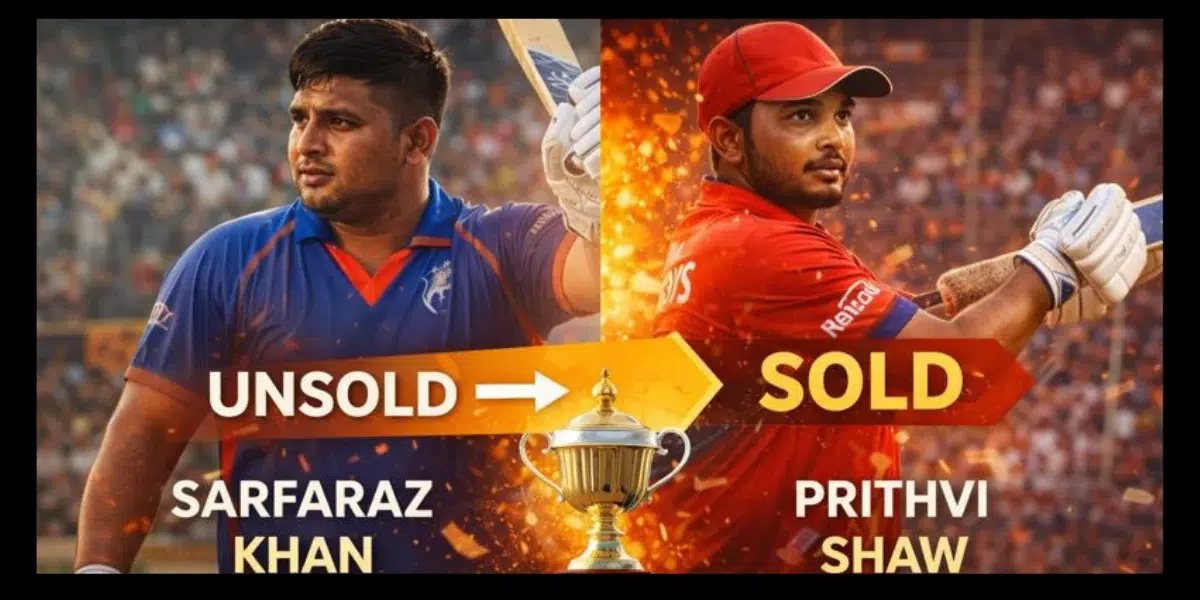
Sarfaraz Khan’s return to relevance has been built on pure performance. His Syed Mushtaq Ali Trophy numbers have been dominant and recent a combination IPL franchises value heavily. Recency bias is real, and Sarfaraz enters at the perfect moment. Like chess prodigies making comebacks.
The intrigue deepens with a JioStar mock auction, where Suresh Raina representing CSK picked Sarfaraz for ₹7 crore. With strong reports of Raina joining CSK’s coaching staff, the connection feels deliberate rather than symbolic.
Prithvi Shaw’s story is more emotional. Once seen as a generational talent, his career slowed due to form and fitness issues. But his domestic resurgence including a 160+ strike rate suggests a player who has reset priorities. At a base price of ₹75 lakh, Shaw offers massive upside with minimal financial risk.
Indian Capped Players: Safe, Valuable Assets
Indian players who can step straight into a playing XI remain the backbone of IPL squad building.
Venkatesh Iyer headlines this group. Fully fit, contributing with both bat and ball, and tactically sharp, he remains a quality option. Expect bidding in the ₹7–10 crore range, with CSK and KKR monitoring closely.
Among spinners, Rahul Chahar and Ravi Bishnoi stand out. Indian leg spinners are scarce. Chahar brings control and IPL experience, while Bishnoi remains a long term investment despite economy concerns.
In pace bowling, Navdeep Saini represents a comeback story, while Akash Deep faces scrutiny due to a white ball economy near 9.5 a figure franchises will evaluate carefully.
🚀 UNCAPPED FIREPOWER: Top Indian Talent Who Will Fetch Big Bids

These are the players who will become ‘crorepatis‘ today. Teams are not buying potential they are buying SMAT proven, high impact specialists.
| PLAYER (The Prospect) | KEY STAT (The Evidence) | SPECIALTY (The Role) | 🔥 AUCTION MAGNET (Why the Bid?) |
|---|---|---|---|
| Ankit Kumar | 390 Runs @ 160 SR | Top-Order Attacker | VOLUME + IMPACT: Leader in runs, proving consistency and T20 strike rate. |
| Ashok Sharma | 20 Wickets / 9 Inns | Indian Express Pacer | SPEED & SCARCITY: Consistently hits 140+ kph; strong buzz from RCB trials. |
| Akeeb Nabi | 15 Wickets @ 7.4 Econ | Swing/Control King | RELIABILITY: A seasoned domestic pacer who guarantees wickets and control. |
| Kartik Sharma | 170+ SR, Age 19 | WK-Batter / Finisher | DUAL THREAT: Young keeper who is a certified high strike rate finisher. |
| Kunal Chandela | Top-3 SMAT Run Scorer | Top-Order Anchor | CONSISTENCY: The solid domestic performer who quietly anchors an innings. |
These are the names that will define the auction’s legacy not the loudest bids, but the smartest ones.
Beyond the Numbers: Why IPL Auctions Matter
For every player whose life changes with a bid, many others walk away disappointed. That is the harsh reality of the IPL auction. But going unsold is not failure. India’s domestic system remains one of the strongest in world cricket.
Price tags do not define quality. Sometimes, they only define pressure.
As the IPL Auction 2026 begins at 2:30 PM, attention will naturally gravitate toward marquee names. But history shows that the real stories often emerge from uncapped players the quiet picks that later look like masterstrokes.
Predict Cameron Green’s team in the comments and subscribe for live IPL Auction 2026 updates and analysis.